NICN Orders Immediate Reinstatement & Back Pay for Terminated Staff: Lessons on Procedural Fairness for Employers
A recent ruling by the National Industrial Court of Nigeria (NICN) sitting in Bauchi serves as a strong reminder to business leaders and HR managers: failing to strictly follow statutory disciplinary procedures will invalidate employee dismissals, regardless of internal investigation findings.
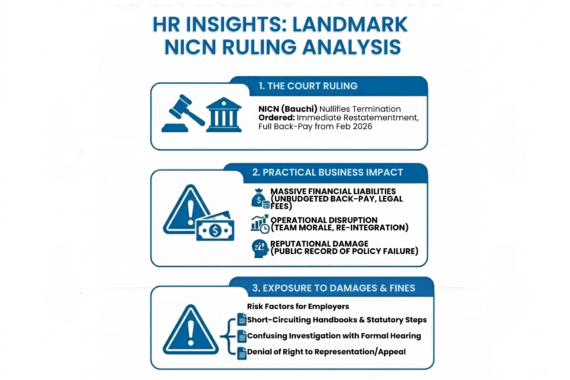
In this landmark case, the court set aside a termination order, mandating the immediate reinstatement of the affected employee alongside the payment of all outstanding salaries, allowances, and accrued benefits from the date of termination.
The Practical Business Impact
While many organizations assume that internal investigative panels or disciplinary committees are sufficient to justify termination, the NICN’s decision highlights a critical legal distinction: investigative findings do not override formal, legally mandated disciplinary pathways.
When a court nullifies a termination, the organization is legally forced to restore the employee to their full role and settle all back-pay and allowances accrued during the suit.
What is the Risk to Other Employers?
- Massive Unbudgeted Financial Liabilities: Employers face severe financial exposure, including accumulated back-pay, legal defense fees, and potential court fines.
- Compounded Back-Pay Exposure: Because court cases often take months to resolve, back-pay obligations accumulate continuously until judgment execution, forcing companies to pay full compensation for unworked periods.
- Operational Disruption: Forced reinstatement can disrupt team structure, damage internal morale, and create tension between leadership and reinstated personnel.
- Reputational Damage: Industrial court rulings are public record, exposing corporate policy oversights to clients, investors, and potential hires.
How Flawed Processes Expose Companies to Fines & Damages
Similar practices expose commercial and institutional organizations to significant legal risk under several key areas:
- Short-Circuiting Handbooks & Statutory Frameworks: Disregarding procedural requirements laid out in employee handbooks, collective bargaining agreements, or company bylaws constitutes a breach of contract and a denial of fair hearing under Section 36 of the 1999 Constitution.
- Confusing Investigation with Formal Hearing: Subjecting an employee to an initial inquiry committee does not substitute for a properly constituted disciplinary panel equipped to issue final decisions.
- Denial of Representation Rights: Failing to afford an employee the right to appear, present evidence, or appeal before the final decision-making body renders the entire process null and void.
Key Takeaways for HR Directors & Executives
- Audit Your Disciplinary Workflow: Ensure your internal handbook clearly outlines every stage of the query, hearing, and escalation process.
- Adhere to Documented Procedures: Never bypass formal steps or alter hearing structures to fast-track a exit.
- Verify Panel Composition: Ensure that disciplinary panels align precisely with your corporate governance policies before issuing termination letters.
Is your organization’s employee handbook aligned with current legal standards?
Protect your business from compliance risks and costly employment litigation. Get In Touch today to schedule an audit of your disciplinary policies.